Overview of
Ensitrelvir

© 2026 Shionogi Inc. Florham Park, NJ 07932.
All Rights Reserved.
MED-US--2600605 v1 5/26.
COVID-19 Continues to Impose a Clinical Burden1,2

Even mild/moderate COVID-19 may affect patients beyond acute
respiratory symptoms3–6

COVID-19 can have significant health consequences beyond the risk of progression to severe illness,2,7 including:
COVID-19 can have significant health consequences beyond the risk of
progression to severe illness,2,7 including:
- Exacerbation or worsening of chronic underlying medical conditions8–10
- Development of
new-onset medical conditions11–13 - Development or exacerbation of long COVID symptoms14,15
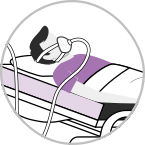
There remains a morbidity and mortality burden of COVID-191
The CDC estimates that from October 1, 2025, through May 9, 2026,* there have been1
There remains a morbidity and mortality burden of COVID-191
The CDC estimates that from October 1, 2025, through May 9, 2026,* there have been1
COVID-19 hospitalizations
COVID-19 deaths

Among patients with COVID‑19, adults with multiple comorbidities were associated with higher healthcare use than those with a single condition or immunocompromised status16
*Based on data from September 28, 2025 through May 9, 2026.
CDC, Centers for Disease Control and Prevention; COVID-19, coronavirus disease 2019.
Ensitrelvir
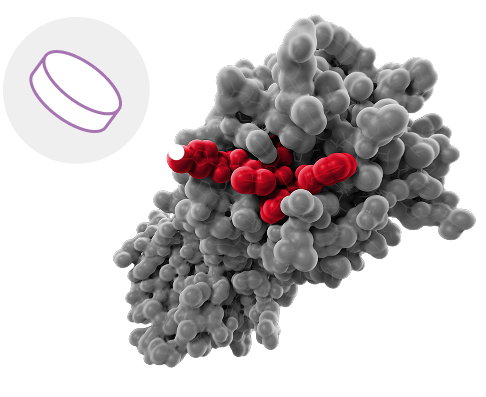
Ensitrelvir, a SARS-CoV-2 main protease (Mpro) inhibitor, is an FDA-approved 5-day oral antiviral for post-exposure prophylaxis of COVID-19 in adults and adolescents aged ≥ 12 years following contact with an individual who has COVID‑1917
Indications and Usage17

What: Indicated for post-exposure prophylaxis of COVID-19
Who: Adults and adolescents ≥ 12 years of age
When: Following contact with an individual who has COVID-19

Begin ensitrelvir as soon as possible and within 72 hours following contact with an individual who has COVID-19
Dosage and Administration17,*
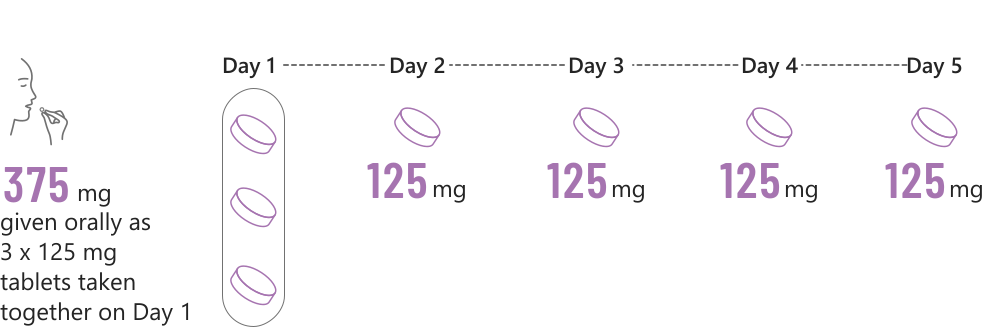
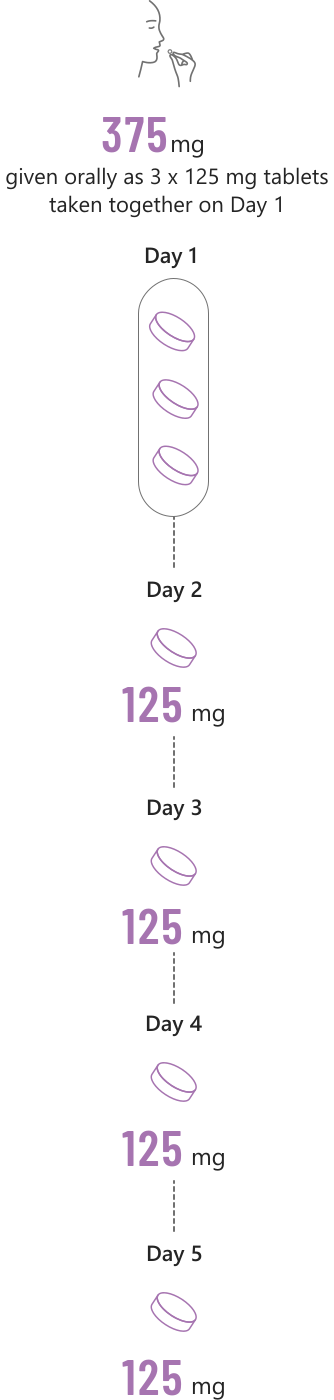
*Ensitrelvir can be taken with or without food.
COVID-19, coronavirus disease 2019.
Contraindications17

- Patients with a history of clinically significant hypersensitivity reactions to ensitrelvir or any other components of the product
- Patients taking drugs primarily metabolized by CYP3A, for which elevated concentrations may be associated with serious and/or life-threatening reactions
- Patients taking drugs that are strong CYP3A inducers considered to significantly reduce ensitrelvir plasma concentrations and that may be associated with the potential for loss of virologic response
Warnings and Precautions17
Embryofetal Toxicity

- Based on animal data, ensitrelvir may cause fetal harm when administered to pregnant women
- Advise pregnant women and females of reproductive potential that ensitrelvir may cause fetal harm
- Verify the pregnancy status of females of reproductive potential prior to initiating ensitrelvir
- Advise females of reproductive potential to use effective contraception during ensitrelvir use and for 2 weeks after the final dose
Risk of serious adverse reactions due to drug interactions

- Ensitrelvir is a strong CYP3A inhibitor and may increase the plasma concentrations of drugs metabolized by CYP3A, or transported by P-gp or BCRP, which may potentially lead to severe, life‑threatening, or fatal events from increased exposure of concomitant medications
- CYP3A inducers may decrease concentrations of ensitrelvir, leading to loss of therapeutic effect
Prior to prescribing ensitrelvir, review all medications taken by the patient to assess potential drug-drug interactions and determine whether concomitant medications require:
- A dose adjustment, interruption, and/or additional monitoring
Consider the benefit of ensitrelvir and whether the risk of potential drug-drug interactions can be managed
Hypersensitivity reactions including anaphylaxis

- Hypersensitivity reactions, including anaphylaxis, anaphylactic shock, and angioedema, have been reported with ensitrelvir
- If signs and symptoms of a clinically significant hypersensitivity reaction occur, immediately discontinue ensitrelvir and initiate appropriate treatment
Adverse reactions17
In the SCORPIO-PEP trial, the most common adverse events (regardless of causality) occurring in ≥ 1% of the ensitrelvir group and at a greater frequency compared with placebo were:*
Scroll within to view the full table
| Adverse Reaction Rates | Ensitrelvir (n = 1,190) | Placebo (n = 1,187) |
|---|---|---|
|
Headache |
2.9% |
2.6% |
|
Diarrhea |
1.7% |
1.3% |
|
Cough |
1.1% |
0.6% |
|
Discontinued study intervention due to an adverse event |
< 0.1% |
< 0.1% |
| Laboratory Abnormalities | Ensitrelvir (n = 1,190) | Placebo (n = 1,187) |
|---|---|---|
|
Asymptomatic hemoglobin decline from baseline (> 2 g/dL) |
3% |
1% |
*The overall safety profile of ensitrelvir is based on data from 2,831 adults and adolescents exposed to the recommended dosage and duration of ensitrelvir in controlled clinical trials. Because clinical trials are conducted under widely varying conditions, adverse reaction rates observed in the clinical trials of a drug cannot be directly compared with rates in the clinical trials of another drug and may not reflect the rates observed in practice.
Drug Interactions17
- Ensitrelvir is a strong CYP3A inhibitor and an inhibitor of P‑gp and BCRP; co‑administration with substrates of these pathways may increase drug exposure and the risk of adverse events
- Ensitrelvir is a CYP3A substrate; therefore, drugs that induce CYP3A may decrease ensitrelvir plasma concentrations and reduce its therapeutic effect
Use of ensitrelvir with strong CYP3A inducers is contraindicated
No dose adjustment recommended when used with moderate/weak CYP3A inducers
For drugs that are CYP3A substrates and contraindicated with ensitrelvir, initiation of ensitrelvir should be considered only after careful evaluation of relevant clinical and pharmacokinetic factors related to the concomitant medication
Re‑initiation of contraindicated CYP3A substrates should be considered based on an assessment of the duration of CYP3A inhibition and patient‑specific considerations
Examples of drugs contraindicated with ensitrelvir due to the risk of potentially serious or fatal interaction include apalutamide, carbamazepine, colchicine, dihydroergotamine, enzalutamide, eplerenone, ergotamine, finerenone, ivabradine, lomitapide, lumacaftor/ivacaftor, lurasidone, methylergonovine, phenytoin, pimozide, quinidine, rifampin, simvastatin, St. John's wort, triazolam, and voclosporin
Please refer to Section 7 Drug Interactions of the Full Prescribing InformationUse in Specific Populations17

Pregnancy: Advise pregnant women and females of reproductive potential that ensitrelvir may cause fetal harm. Advise females of reproductive potential to use effective contraception during use of ensitrelvir and for 2 weeks after the final dose

Lactation: Based on animal data, advise lactating women not to breastfeed while taking ensitrelvir and for ≥ 2 weeks after the final dose*

Pediatric (< 12 years): Safety not established

Geriatric: No overall differences in safety were observed compared with younger subjects. Greater sensitivity of some older individuals cannot be ruled out

Renal/Hepatic Impairment: No dosage adjustment recommended in patients with mild, moderate, or severe renal impairment and in patients with mild (Child-Pugh Class A) or moderate (Child-Pugh Class B) hepatic impairment. The pharmacokinetics and safety of ensitrelvir have not been studied in patients with severe hepatic impairment (Child-Pugh Class C) or in patients with kidney failure receiving dialysis
*There are no data on the presence of ensitrelvir in human milk, effects on breastfed infants, or effects on milk production.
BCRP, breast cancer resistance protein; COVID-19, coronavirus disease 2019; CYP, cytochrome P450; P-gp, p-glycoprotein.
Mechanism of Action
Ensitrelvir inhibits SARS-CoV-2 Mpro, which is essential for processing viral polyproteins pp1a and pp1ab, thereby preventing viral replication18
Scroll within to view the full image
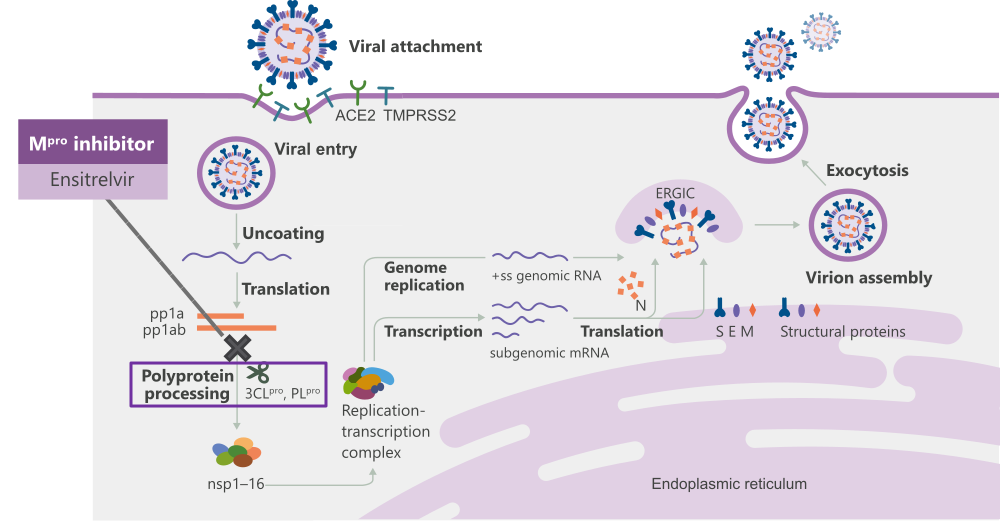
Image adapted from Jeong GU, et al. Front Microbiol. 2020;11:1723 under the Creative Commons Attribution (CC BY) license.19
Pharmacodynamics17
Exposure-Response
No association between plasma ensitrelvir concentration and the primary endpoint (COVID‑19 symptoms and RT‑PCR positive)
Cardiac Electrophysiology
No QT prolongation was observed based on concentration‑QTc analysis after a single dose of ensitrelvir ranging from 20 to 2000 mg
Pharmacokinetics17
| General Information | Day 1 | Day 5 |
|---|---|---|
| Cmax (mcg/mL)* | 18.1 (22.6) | 18.2 (40.5) |
| Elimination | |
|---|---|
| Terminal Half-Life (hours)† | 42.2 to 48.1 |
| Absorption | Day 1 | Day 5 |
|---|---|---|
| Tmax (hours)‡ | 2.50 (1.50, 8.00) |
2.00 (1.00, 8.00) |
| Effect of food¶ | No clinically significant differences in ensitrelvir pharmacokinetics observed following administration of a high‑fat, high‑calorie meal | |
*Data represent geometric mean (coefficient of variation, %).
†Following a single-dose administration of ensitrelvir 20 to 2000 mg.
‡Data represent median (range). Ensitrelvir 375 mg on Day 1 followed by 125 mg on Days 2 to 5; tau is dosing interval of 24 hours.
¶High‑fat, high‑calorie meal. Total calories were 863 kcal (27.2% carbohydrates, 17.3% proteins, and 55.4% fat).
3CLpro, 3C-like protease; ACE2, angiotensin-converting enzyme 2; AUC0‑inf, area under the concentration–time curve from time zero to infinity; Cmax, maximum concentration; E, envelope; ERGIC, endoplasmic reticulum–Golgi intermediate compartment; M, membrane; Mpro, main protease; mRNA, messenger RNA;
N, nucleocapsid; nsp1–16, nonstructural proteins 1–16; PLpro, papain-like protease; pp1a/1ab, polyprotein 1a/1ab; RNA, ribonucleic acid; S, spike; SARS-CoV-2, severe acute respiratory syndrome coronavirus 2; ss, single-stranded; Tmax, time to maximum concentration; TMPRSS2, transmembrane protease serine 2.
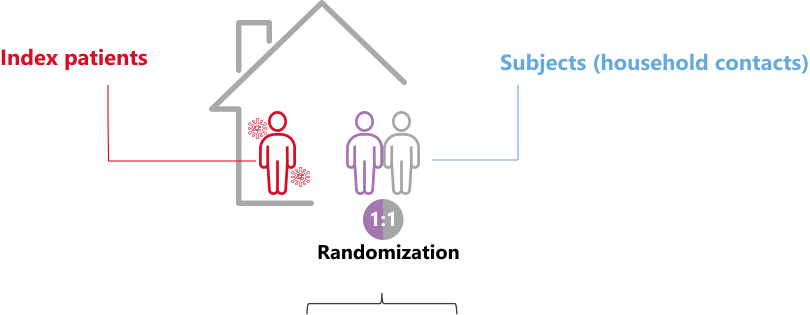
SCORPIO-PEP is a randomized, double‑blind, placebo‑controlled, multinational trial (NCT05897541) evaluating the efficacy and safety of ensitrelvir for post‑exposure prophylaxis of COVID-1917
Key Inclusion Criteria
- ≥ 12 years with a negative SARS-CoV-2 test (nucleic acid amplification test or antigen test at the local laboratory) and lived in a household with the index patient for the duration of the study
- Enrolled within 72 hours of symptom onset in an index patient with COVID‑19 within their household
Key Exclusion Criteria
- Individuals who were using or were anticipating the use of any medications prohibited with ensitrelvir
Scroll within to view the full image
Scroll within to view the full image
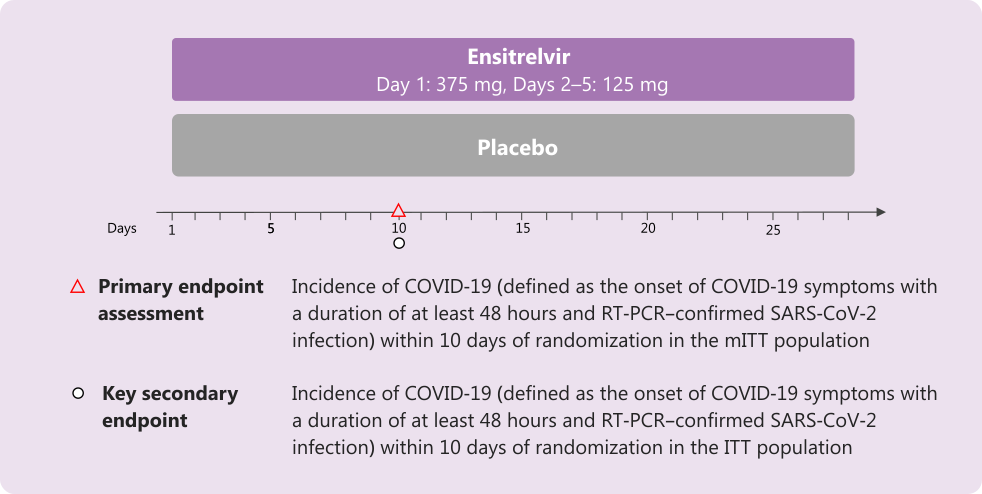
ITT population (n = 2,387)

ITT population (n = 2,387)
All eligible randomized subjects who had a negative screening test for SARS-CoV-2 as determined by the nucleic acid amplification test or antigen test at the local laboratory
Scroll within to view the full image
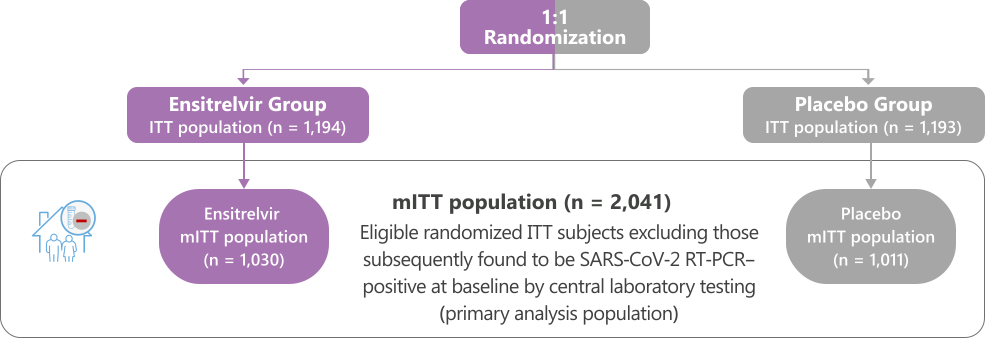
COVID-19, coronavirus disease 2019; ITT, intention-to-treat; mITT, modified ITT; RT-PCR, reverse-transcriptase polymerase chain reaction; SARS-CoV-2, severe acute respiratory syndrome coronavirus 2.
SCORPIO-PEP is a randomized, double‑blind, placebo‑controlled, multinational trial (NCT05897541) evaluating the efficacy and safety of ensitrelvir for post‑exposure prophylaxis of COVID-1917

Baseline demographic and disease characteristics were balanced between the ensitrelvir and placebo arms
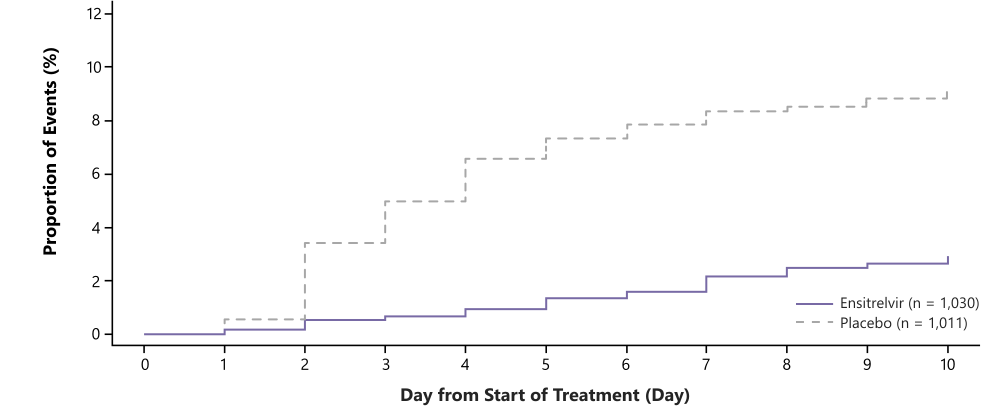
Incidence of COVID‑19 through Day 10 (mITT and ITT populations) in the SCORPIO‑PEP trial
Scroll within to view the full table
| Ensitrelvir 375 mg (Day 1), 125 mg (Days 2–5); n (%) |
Placebo (Days 1–5); n (%) |
Risk Ratio* Estimate (95% CI)† | |
|---|---|---|---|
|
Primary endpoint: |
30/1,030 |
91/1,011 |
0.33 |
|
Key secondary endpoint: |
52/1,194 |
122/1,193 |
0.43 |
*Risk ratio of symptomatic COVID-19 through Day 10 in subjects randomized to ensitrelvir vs subjects randomized to placebo.
†CI calculated from the GEE Poisson regression model.
‡p < 0.0001 (GEE Poisson model).
A 67% risk reduction in confirmed symptomatic COVID‑19 (with symptom duration of at least 48 hours) through Day 10 was achieved with ensitrelvir compared with placebo in the mITT population
Kaplan-Meier curve for time to incidence of SARS-CoV-2 infection with symptom onset through day 10 (mITT population)
Scroll within to view the full image
CI, confidence interval; COVID-19, coronavirus disease 2019; GEE, generalized estimating equation; ITT, intention-to-treat; mITT, modified ITT;
SARS-CoV-2, severe acute respiratory syndrome coronavirus 2.
Abbreviations: 3CLpro, 3C-like protease; ACE2, angiotensin-converting enzyme 2; AUC0‑inf, area under the concentration–time curve from time zero to infinity; BCRP, breast cancer resistance protein; CDC, Centers for Disease Control and Prevention; CI, confidence interval; Cmax, maximum concentration; COVID-19, coronavirus disease 2019; CYP, cytochrome P450; E, envelope; ERGIC, endoplasmic reticulum–Golgi intermediate compartment; FDA, Food and Drug Administration; GEE, generalized estimating equation; ITT, intention-to-treat; M, membrane; mITT, modified ITT; Mpro, main protease; mRNA, messenger RNA; N, nucleocapsid; NP, nasopharyngeal; nsp1–16, nonstructural proteins 1–16; P-gp, p-glycoprotein; PLpro, papain-like protease; pp1a/1ab, polyprotein 1a/1ab; RNA, ribonucleic acid; RT-PCR, reverse-transcriptase polymerase chain reaction; S, spike; SARS-CoV-2, severe acute respiratory syndrome coronavirus 2; ss, single-stranded; Tmax, time to maximum concentration; TMPRSS2, transmembrane protease serine 2; U.S., United States.
References: 1. CDC. https://www.cdc.gov/covid/php/surveillance/burden-estimates.html Accessed May 22, 2026; 2. Scott A, et al. BMC Med. 2024;22(1):47; 3. Xie Y, et al. Nat Med. 2022;28(3):583–590; 4. Xie Y, et al. BMJ. 2022;376:e068993; 5. Tenforde MW, et al. MMWR Morb Mortal Wkly Rep. 2020;69(30):993–998; 6. Graham EL, et al. Ann Clin Transl Neurol. 2021;8(5):1073–1085; 7. Li J, et al. Signal Transduct Target Ther. 2023;8(1):416; 8. Hadidchi R, et al. EBioMedicine. 2025;116:105778; 9. Di Iorio M, et al. Semin Arthritis Rheum. 2022;55:152025; 10. Kubota T, et al. Clin Neurol Neurosurg. 2021;200:106349; 11. Tzang CC, et al. Clin Rev Allergy Immunol. 2025;68(1):111; 12. Velásquez García HA, et al. Diabetes Metab Res Rev. 2026;42(2):e70136; 13. Shan D, et al. npj Dement. 2025;1:28; 14. Greenhalgh T, et al. Lancet. 2024;404(10453):707–724; 15. Bowe B, et al. Nat Med. 2022;28(11):2398–2405; 16. Ernst FR, et al. Infect Dis Ther. 2026;15(1):327–343; 17. XOCOVA [package insert]. Florham Park, NJ: Shionogi Inc.; 18. Unoh Y, et al. J Med Chem. 2022;65(9):6499–6512; 19. Jeong GU, et al. Front Microbiol. 2020;11:1723.